TL;DR
Computer Science & ECE offer high private sector pay, while Civil & Mechanical dominate government job vacancies.
Lateral Entry to 2nd Year B.Tech is now seamless; a 3-year diploma equals 50% of a degree credits (Level 5.5).
Admission relies on state exams (POLYCET/JEECUP) in April–May; one document error can cancel your seat.
Which Polytechnic Branch Has the Best Future in 2026?
Short Answer: Computer Science (CSE) offers the highest starting salaries in the private sector, but Core Engineering (Mechanical/Civil) guarantees steady employment in government sectors and manufacturing hubs like Pune and Visakhapatnam.
Choosing a branch determines your career trajectory for the next 40 years. In 2026, the job market is split between the digital surge and the industrial renaissance driven by the “Make in India” push.
1. Computer Science & IT: The High-Growth Path
Everyone wants Computer Science (CSE) because of the hype, but you must understand the reality.
The Opportunity: CSE graduates command the highest entry-level packages, often ₹3.0–₹5.0 Lakhs Per Annum (LPA) in service-based IT companies.
The Risk: A diploma alone often hits a “glass ceiling.” To reach senior roles like Data Scientist or AI Architect, you generally need a B.Tech degree. If you choose CSE in polytechnic, plan for Lateral Entry immediately.
In Practice: Don’t just learn coding. Focus on “Prompt Engineering” and “Cybersecurity” to stay relevant against AI automation.
2. Core Engineering (Mechanical, Civil, Electrical): The Stability Engines
Contrary to rumors, core branches are booming in Tier 2 cities due to new Production Linked Incentive (PLI) schemes.
Mechanical Engineering: Demand is high in auto-hubs like Nagpur and Chennai. Government Polytechnic Nagpur reported a massive 95.16% placement rate for Mechanical students in 2024-25.
Civil Engineering: This is your gateway to government jobs (Junior Engineer in PWD, Railways). While private placements are lower (approx. 45%), the long-term stability in government service is unmatched.
Electronics (ECE): The “Dark Horse” of 2026. With India’s semiconductor push, ECE diploma holders are needed for chip testing and mobile manufacturing. Government Polytechnic Vijayawada saw 100% placement for ECE recently.
State-Wise Branch Trends
Andhra Pradesh/Telangana: High demand for ECE and EEE due to local electronics manufacturing clusters.
Maharashtra (Pune/Nashik): Mechanical and Automobile Engineering rule due to the auto belt.
Uttar Pradesh: Civil Engineering remains the top choice for students targeting SSC-JE and UP-PWD roles.
How Does the New Credit System (NCrF) Help Diploma Students?
Short Answer: The National Credit Framework (NCrF) now values a 3-year diploma at Credit Level 5.5, which is legally equivalent to completing the first year of a B.Tech degree.
Gone are the days when a diploma was just a “vocational certificate.” The NCrF has integrated vocational education with mainstream degrees.
Credit Level 5.5: A Class 12 pass is Level 4.0. A 3-year diploma elevates you to Level 5.5. This credit level is the mandatory baseline that universities use to admit you directly into the 2nd Year of B.Tech without asking you to repeat subjects.
Academic Bank of Credits (ABC): Your semester marks are stored digitally in your ABC account. If you are forced to drop out after 2 years due to financial issues, you can save your credits and rejoin later to finish your diploma.
In Practice:
Previously, universities could deny lateral entry if your branch didn’t match perfectly. Now, the credit equivalence forces universities to be more flexible. A Mechanical diploma holder can more easily switch to a Mechatronics or Robotics B.Tech degree because the credits align, even if the exact subject names differ.
Can I Join B.Tech Directly After Diploma? (Lateral Entry)
Short Answer: Yes, you can skip the first year of engineering and join the 3rd Semester (2nd Year) directly if you score at least 45% in your diploma (40% for reserved categories).
Lateral Entry is the smartest route for Tier 2/3 city students to save one year of tuition fees and enter the workforce with a full degree.
Key Eligibility Rules (2026)
Minimum Marks: You need 45% aggregate in your diploma. For SC/ST/OBC candidates, the cutoff is 40%.
Branch Mapping:
Strict Mapping (Most States): Civil Diploma $\rightarrow$ Civil B.Tech.
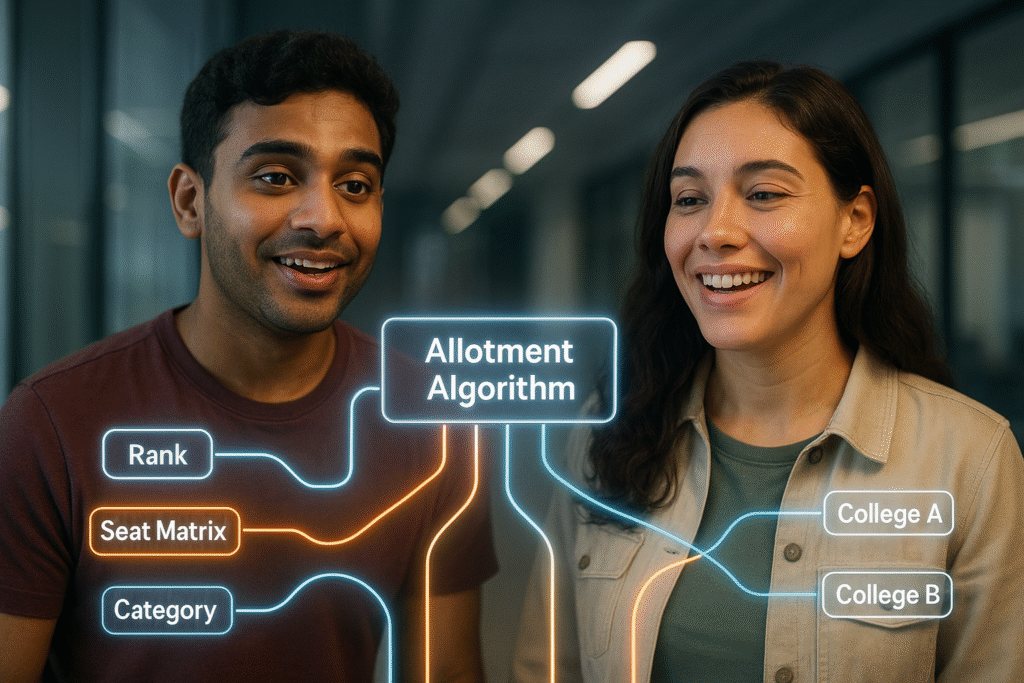
Flexible Mapping (AP/TS): The “Integrated Merit Rank” in exams like ECET allows you to switch branches. You can do a Diploma in Civil but join B.Tech in Computer Science if you clear the specific entrance paper.
The “Math Gap”: Diploma students often struggle with “M3” (Engineering Mathematics) in B.Tech.
Action: Use the 3-month gap between your diploma exams and B.Tech counseling to take a bridge course in Calculus.
In Practice:
Students often think Lateral Entry is “easier.” It is not. You join a class that has already bonded for a year, and you miss the foundational First Year coding labs. You must work double-time in your 3rd Semester to catch up.
What is the Admission Process for Polytechnic in 2026?
Short Answer: Admission is mostly through state-level entrance exams held in April or May; you must apply online between February and March 2026.
State-Wise Quick Reference Guide (2026 Outlook)
| State | Exam Name | Tentative Exam Date | Key Rule / Exception | Source |
| Andhra Pradesh | AP POLYCET | April 30, 2026 | Fee Reimbursement: Income Certificate must be issued after Jan 1 of admission year. | |
| Telangana | TS POLYCET | May 15, 2026 | Gap Certificate: Mandatory if you have a study gap of >1 year. | |
| Uttar Pradesh | JEECUP | March/April 2026 | Freeze vs Float: Choosing ‘Float’ requires a security deposit; if unpaid, you lose the seat. | |
| Maharashtra | Merit Based | June 2026 (Reg.) | Non-Creamy Layer (NCL): Must be valid till March 31, 2027. No receipt accepted. | |
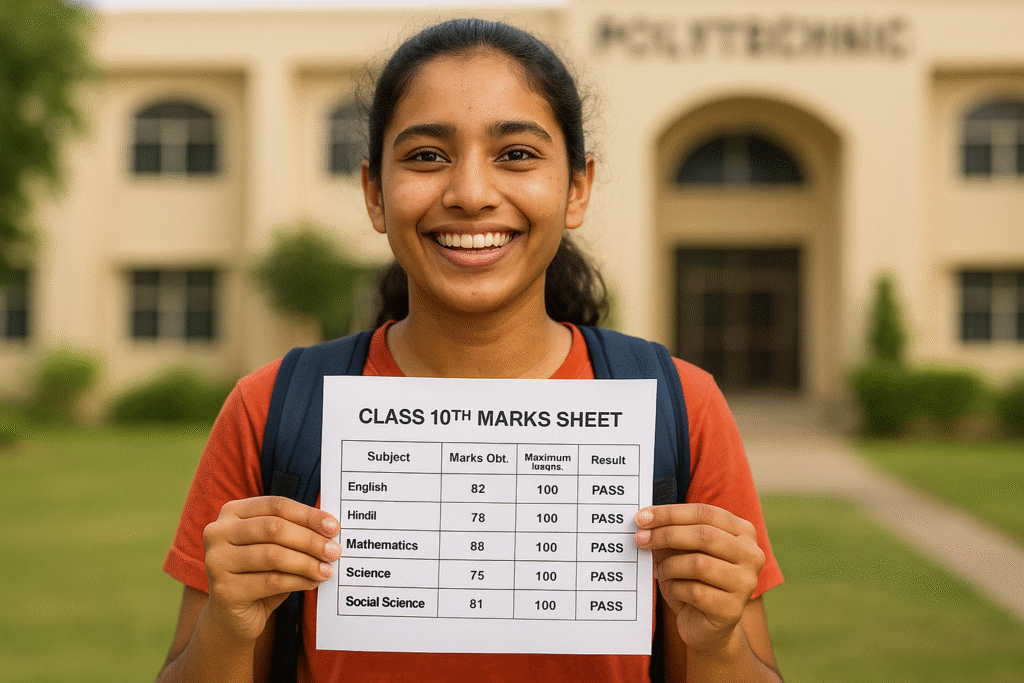
| Tamil Nadu | Merit Based | May 2026 (Reg.) | No Exam: Admission is purely based on Class 10 marks (Maths/Science). | |
| Karnataka | Merit Based | May 2026 (Reg.) | DS & CP: Specific reservations for rural/Kannada medium students exist. |
Important Note for Other States:
If your state is not listed (like Bihar or Jharkhand), visit your state’s “Technical Education Board” website immediately. Most forms close by March 31st.
Ground Reality: Placements & Salary in Tier 2 Cities
Short Answer: Expect a starting salary between ₹1.8 LPA and ₹3.0 LPA in core sectors; IT roles may pay slightly higher but are concentrated in metro cities.
Don’t believe the “₹10 Lakh package” marketing hoardings. Those are for 1 in 1,000 students.
Real Placement Data (Government Polytechnics)
Govt Polytechnic Vijayawada: The average package is ₹2.2 LPA. While the highest offer touched ₹9.2 LPA, most students (over 94%) got placed in standard operational roles.
Govt Polytechnic Nagpur: Mechanical graduates saw 95% placement, driven by companies like Bajaj and Tata Motors. Civil placement struggled at ~45%.
The “Color Blindness” Barrier
This is a critical edge case often missed.
Restriction: If you are color blind, you cannot join branches like Mining, Marine Engineering, and often Electrical/Chemical due to safety risks (e.g., distinguishing color-coded wires).
Action: Get an Ishihara Chart test done by an eye doctor before counseling. If you test positive, stick to Computer Science or Civil Engineering to avoid rejection during medical verification.
3 Mistakes That Can Cancel Your Admission
Short Answer: Submitting expired income certificates, misunderstanding the “Freeze/Float” option, and entering web options without a priority list are the top reasons students lose seats.
1. The “Income Certificate” Trap
Mistake: Using an old income certificate (older than 1 year).
Reality: In AP and Telangana, the certificate must be issued after January 1st of the admission year. If it’s old, your Fee Reimbursement (Jagananna Vidya Deevena / TS ePASS) will be rejected, and you will have to pay the full fee.
2. The “Freeze vs. Float” Blunder (UP/Maharashtra)
Mistake: Selecting “Float” to wait for a better college but forgetting to pay the “Seat Acceptance Fee.”
Reality: If you choose Float but don’t pay the security deposit (approx. ₹3000), your currently allotted seat is cancelled immediately. You end up with nothing.
3. Web Options Errors
Mistake: Listing only 5-10 “top colleges” in web counseling.
Reality: If your rank is 15,000 and you only list colleges that close at rank 5,000, the computer will reject your application. Always list at least 40-50 options, mixing top colleges with “safe” local colleges.
FAQ: Common Student Queries
Q1: Can I join a polytechnic if I have a gap after 10th?
A1: Yes, but you must produce a Gap Certificate (an affidavit on ₹100 stamp paper) stating the reason for the gap (e.g., health, preparation). Ensure you were not enrolled in another regular course during this time.
Q2: Is the “Sandwich Course” better than a regular diploma?
A2: Sandwich courses include mandatory industrial training (often 6-12 months). They are excellent for Mechanical and Production branches as you gain real work experience, which employers prefer over freshers with no exposure.
Q3: Can I get lateral entry into IITs/NITs after a diploma?
A3: No. IITs and NITs do not offer lateral entry for diploma holders. You must write JEE Main and join the First Year, competing with Class 12 students. Lateral entry is primarily for state government and private engineering colleges.
Q4: What is the age limit for polytechnic admission?
A4: Generally, there is no upper age limit. However, for scholarship/fee reimbursement eligibility, some states (like AP/TS) may have age caps (e.g., 20-24 years for General/BC categories).
Q5: Which branch is best for a government job?
A5: Civil Engineering has the highest number of vacancies in state PWDs, Irrigation departments, and SSC-JE exams, followed closely by Electrical and Mechanical Engineering. CSE has very few government openings.
About the Author
Rajesh Sharma
Technical Education Counselor & Analyst
Rajesh has over 12 years of experience guiding students through the AP/TS POLYCET and JEECUP ecosystems. He specializes in decoding government notifications to help rural students secure fee reimbursements and merit seats.