TL;DR: Key Takeaways
It’s the “Safe Harbor” for Branch Change: Internal Sliding is the only method to change your engineering branch (e.g., Mechanical to CSE) within the same college while retaining government fee reimbursement eligibility (like JVD or Vidya Deevena).
Strictly “One-Way” & Irreversible: Once you accept a slide to a new branch, your previous seat is automatically cancelled and re-allotted to another student immediately. You cannot go back to your old seat.
Institutional vs. Convenor Sliding: Ensure you participate in the Convenor-run sliding phase (online). Sliding done later during “Spot Admissions” at the college level often disqualifies you from scholarship schemes.
What Is Internal Sliding in Polytechnic Counselling?
Internal Sliding is a final counselling phase that allows admitted students to switch to a preferred branch within the same college based on their rank.
It is strictly an intra-college process. You cannot use this phase to transfer from Government Polytechnic, Vijayawada to Government Polytechnic, Visakhapatnam. The system restricts your options solely to the institute code where you have already reported and deposited your certificates.
In Practice: If you joined in Civil Engineering but have a good rank, you can apply for Computer Science (CSE) in the same college. If a CSE student leaves (e.g., for IIIT or Intermediate), the software moves you into that empty seat.
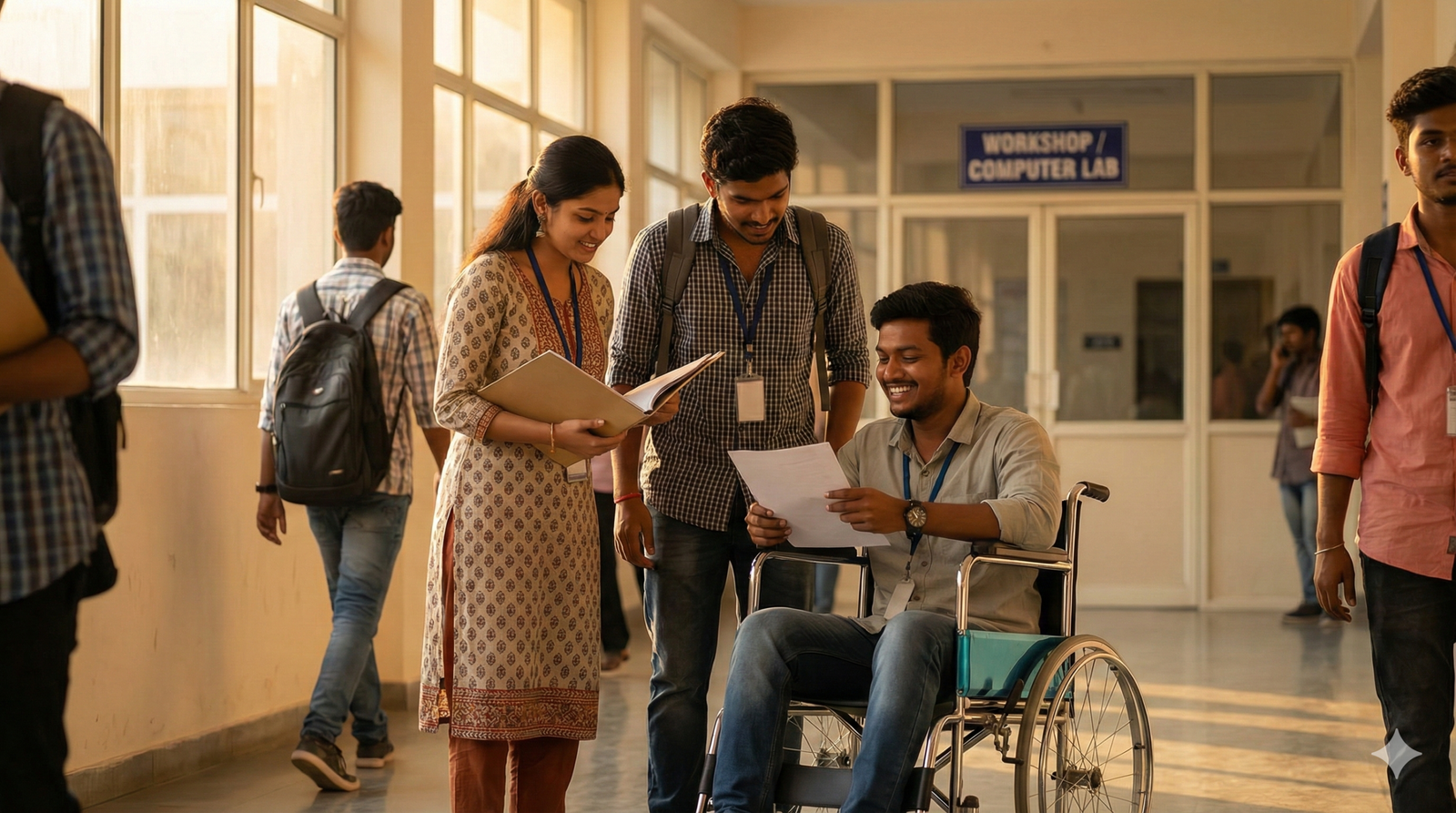
The Financial Impact: Sliding vs. Spot Admissions
This is the most critical financial decision you will make. Participating in the official Internal Sliding phase protects your “Convener Quota” status, keeping you eligible for state fee reimbursement schemes.
1. The “Safe” Zone (Convenor Sliding)
If you slide during the official online schedule notified by the state board (SBTET/DTE), you are still considered a merit student.
Result: You continue to receive 100% tuition fee waivers (e.g., Jagananna Vidya Deevena in AP or Fee Reimbursement in TS).
2. The “Danger” Zone (Spot Admissions)
If you miss the sliding dates and try to change your branch during the “Spot Admission” round (usually 2-3 days later), you enter the “Institutional/Management” pool.
Result: State policies explicitly disqualify Spot Admission candidates from fee reimbursement. You will likely have to pay the full tuition fee (approx. ₹25,000–₹35,000 per year) out of pocket.
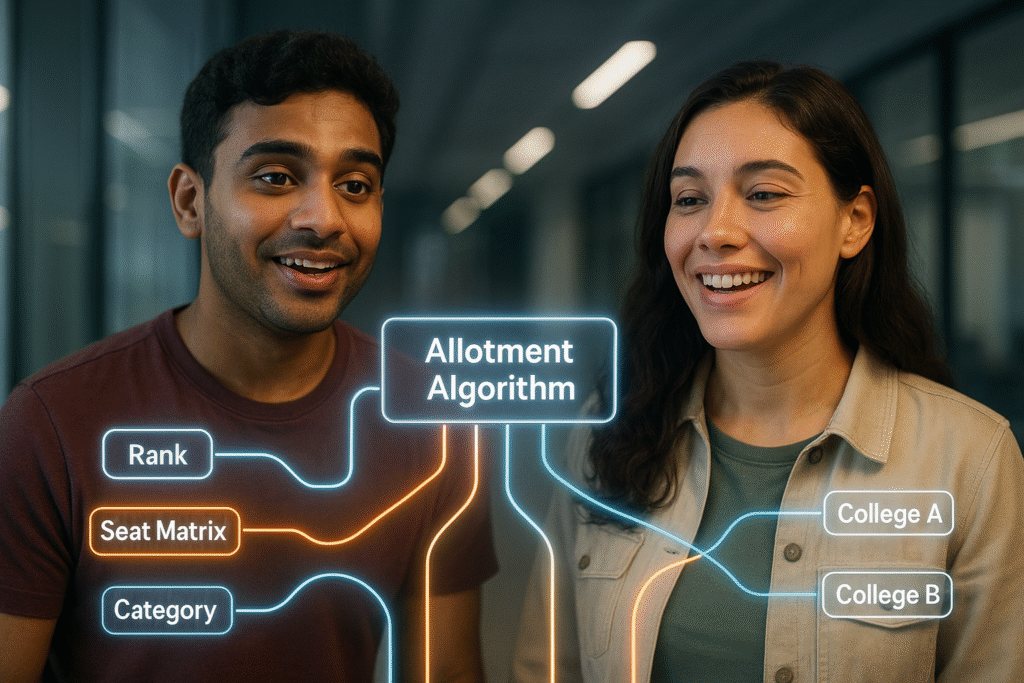
How the “Domino Effect” Algorithm Works
Vacancies for sliding are created by a chain reaction of students leaving the system.
Unlike the main counselling rounds where thousands of seats are open, sliding relies on specific vacancies.
The Trigger: A top-ranker vacates a Diploma seat to join IIIT Basara, RGUKT, or Intermediate (Class 11).
The Shift: The software fills that empty top seat with the highest-ranked internal applicant (e.g., moving a student from ECE to CSE).
The Chain: The ECE seat is now empty. The software moves a Mechanical student into ECE.
The Result: A new vacancy opens at the bottom (Mechanical), which goes to the Spot Admission pool.
Expert Note: Do not rely on the “Vacancy Position” report shown before sliding. Hidden vacancies arise during the process as other students slide upward.
State-Wise Quick Guide: Rules & Terminology
Polytechnic rules vary significantly by state. Use this table to navigate to your official state counseling portal for specific sliding dates.
| State / Exam | Terminology | Official Portal (For Updates) | Key Rule to Remember |
| AP (POLYCET) | Internal Sliding | appolycet.nic.in | Occurs after Final Phase reporting. Strictly online. Preserves JVD eligibility. |
| Telangana (POLYCET) | Internal Sliding | tgpolycet.nic.in | Occurs after Final Phase. Vacancies often filled by Lateral Entry if not slid. |
| Uttar Pradesh (JEECUP) | Float / Slide | jeecup.admissions.nic.in | “Slide” option locks you to the institute. Requires security deposit payment. |
| Maharashtra (DTE) | Betterment | poly25.dtemaharashtra.gov.in | Use “Not Freeze” for betterment. “Auto-Freeze” applies if 1st preference is met. |
| West Bengal (JEXPO) | Auto-Upgradation | scvtwb.in | Default is ON. You must manually “Lock” if you don’t want to slide. |
Practical Risks: What Colleges Don’t Tell You
1. The Hostel Quota Trap
Government polytechnic hostels allocate rooms based on branch quotas (e.g., 10 beds for Civil, 10 for ECE).
The Risk: You might slide from Civil (where you had a hostel bed) to ECE (where the hostel quota is full). The college is not obligated to give you a hostel seat in your new branch. You may have to stay in a private PG.
2. The “Ghost Vacancy” Issue
Sometimes, the online portal shows zero vacancies in your desired branch.
The Reality: A student may have stopped attending classes without formally cancelling admission. These “ghost seats” are technically full during sliding but will be declared vacant during Spot Admissions. Unfortunately, you cannot access them during the reimbursement-safe sliding window.

Future Outlook: NEP 2020 & The “General Stream”
The concept of rigid branch allocation is slowly being phased out under the National Education Policy (NEP) 2020.
Academic Bank of Credits (ABC): Future polytechnic frameworks are integrating with the(https://www.abc.gov.in), which may allow students to earn “Minor degrees.” Even if you are in Mechanical, you could earn credits in Coding to get a “Minor in CSE,” reducing the pressure to slide branches.
First-Year Commonality:(https://www.aicte-india.org) is encouraging a model where the first year is common for all. Branch allocation would happen in the 2nd year based on your 1st-year GPA, not your entrance rank. This system is already in pilot phases in select autonomous institutes.
FAQ: Common Student Questions
Q: If I get a new seat in sliding, can I go back to my old branch if I don’t like the new one?
A: No. The moment a new seat is allotted, your previous seat is instantly cancelled and given to another student. It is a one-way process. Only opt for branches you are 100% sure about.
Q: I am in a “Self-Finance” seat. Can I slide to a “Regular” seat?
A: Yes. This is a smart financial move. If a Regular (low fee) seat opens up in your branch due to a dropout, you can slide into it to save on fees (if you are paying out of pocket).
Q: Do I need to re-submit my certificates after sliding?
A: Generally, no. Your certificates are already with the Principal. However, you must download the New Allotment Order and submit a copy to the administrative office to update your records in the scholarship portal (Jnanabhumi/ePASS).
Q: Can I slide to a different college?
A: No. Internal Sliding is strictly restricted to the same college. To change colleges, you must wait for a “Special Round” or “Spot Admission” (risk of losing fee reimbursement applies).
Conclusion: When to Slide?
Internal Sliding is a strategic tool, not a browsing session. Use it only if you are desperate for a specific branch and are already holding a seat in the correct college.
The Golden Rule: If you are holding a seat in a top-tier Government Polytechnic, do not risk sliding into a “better” branch in a lower-tier college during special rounds. Stick to Internal Sliding to upgrade within the top institute. This balances academic ambition with the safety of your government scholarship.