Your Child Wants to Do Polytechnic After 10th. Should You Say Yes? A Parent’s Honest Guide (2026)
Your child wants to skip 11th–12th and join polytechnic after 10th. Is it the right decision? This 2026 guide gives parents the real facts — costs, salaries, B.Tech options, government jobs, and the 5 situations where polytechnic is the smartest move.
TL;DR — For Parents Who Need a Quick Answer
- Polytechnic is NOT a “lesser” path. It is a different path — one that is shorter, cheaper, more practical, and leads to real jobs. Your child can still become an engineer (B.Tech via lateral entry), get government jobs (SSC JE, Railway), or even work abroad.
- The “Diploma → Lateral Entry → B.Tech” route saves 1 full year and lakhs of rupees compared to the traditional “11th → 12th → 4-year B.Tech” path. Both end with a B.Tech degree.
- A government polytechnic costs ₹10,000–₹35,000/year. With scholarships (SC/ST/OBC/EWS), the cost can drop to nearly zero. (See our full scholarship guide)
- Starting salaries after diploma range from ₹1.8–₹4.5 LPA. Specialized branches like Computer Science, AI/ML, and Electronics tend to pay higher. Government jobs (Junior Engineer) start at ₹35,000–₹45,000/month with allowances.
- Say YES if: Your child is practical-minded, your family needs them earning sooner, finances are tight, or they are not interested in pure academics.
- Say WAIT if: Your child wants to be a doctor (NEET requires 12th), a lawyer (CLAT requires 12th), or a CA (requires 12th). These careers have no polytechnic pathway.
A Letter to Every Parent Reading This at 2 AM
It is March 2026. Your child just finished — or is about to finish — their 10th board exams. And somewhere in the last few weeks, they said something that caught you off guard:
“Amma/Nanna/Papa, I want to do polytechnic.”
Or maybe it was a relative who suggested it. Or a neighbor whose son “did diploma and is now earning well.” Or maybe you saw an advertisement for a polytechnic college and wondered: Is this legitimate? Is this good enough for my child?
You opened Google. You searched. And now you are reading article after article, trying to figure out if this decision will help your child — or hurt them.
This article is written for you. Not for your child. For you — the parent who will ultimately say yes or no.
We will not give you vague motivational statements. We will give you numbers, facts, timelines, and the honest truth about what works and what does not. By the end, you will have enough information to make a confident decision.

Part 1: What Exactly Is a Polytechnic Diploma?
Let us start with the basics, because there is a lot of confusion.
A polytechnic diploma is a 3-year technical education program that your child can join directly after passing 10th class. It is offered by government and private polytechnic colleges across India, approved by AICTE (All India Council for Technical Education) and affiliated to the State Board of Technical Education (SBTET).
What it is NOT:
- It is not an ITI. ITI courses are 1–2 years and focus on trade skills (electrician, fitter, welder). A diploma is more advanced — it covers engineering subjects at a foundational level.
- It is not a “certificate course” from a coaching center. It is a government-recognized qualification.
- It is not a dead end. It leads to B.Tech (via lateral entry), government jobs, private jobs, and even opportunities abroad.
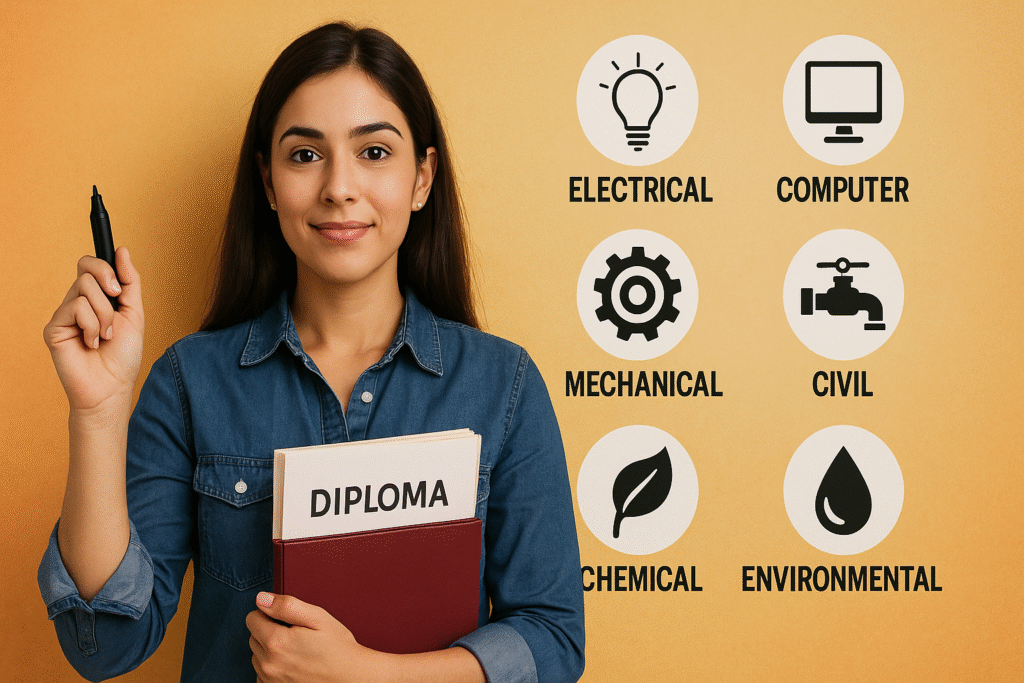
Branches available include Mechanical Engineering, Civil Engineering, Electrical Engineering, Electronics & Communication (ECE), Computer Science & Engineering (CSE), Information Technology, Automobile Engineering, and newer branches like AI & Machine Learning.
Part 2: The Two Paths to B.Tech — A Side-by-Side Comparison
This is the comparison every parent needs to see. Both paths lead to the same destination: a B.Tech engineering degree. But the routes are very different.
Path A: The “Traditional” Route
10th → 11th → 12th (2 years) → JEE/State CET → B.Tech (4 years) = 6 years total
Path B: The “Diploma + Lateral Entry” Route
10th → Polytechnic Diploma (3 years) → Lateral Entry into B.Tech 2nd Year (3 years) = 6 years total
Wait — both take 6 years? Yes. But look at the differences:
| Factor | Path A (11th–12th → B.Tech) | Path B (Diploma → Lateral Entry B.Tech) |
|---|---|---|
| Total duration to B.Tech | 6 years | 6 years |
| Can your child earn money midway? | No (student for all 6 years) | Yes — after 3 years of diploma, they can work AND study B.Tech part-time or later |
| Total cost (government colleges) | ₹3–5 lakh (11th–12th + 4 years B.Tech) | ₹1.5–3.5 lakh (diploma + 3 years B.Tech lateral) |
| Total cost (private colleges) | ₹8–15 lakh | ₹4–8 lakh |
| Entrance exam pressure | Very high (JEE Main/Advanced, State CETs for all 4 years of B.Tech) | Lower (POLYCET for diploma is easier; ECET for lateral entry is moderate) |
| Practical skills at age 19 | Minimal (still in 1st year B.Tech) | Strong (3 years of hands-on workshop + lab training) |
| Can skip B.Tech and still get a job? | No — 12th alone does not qualify for technical jobs | Yes — diploma alone qualifies for Junior Engineer, Technician, and many private sector roles |
| Government job eligibility | After B.Tech completion (age 24+) | After diploma completion (age 19) — SSC JE, RRB, State PSC posts are open |
The critical advantage of Path B: Your child has a “checkpoint” at age 19. After the diploma, they can choose to work, or continue to B.Tech, or do both. In Path A, there is no checkpoint — your child is locked into 6 years of continuous education with no earning ability.
Part 3: The Money Question — What Will It Cost and What Will They Earn?
Parents are practical people. Let us talk numbers.
Cost of Polytechnic Education
| College Type | Annual Tuition Fee | 3-Year Total | With Scholarships (SC/ST/OBC) |
|---|---|---|---|
| Government Polytechnic | ₹10,000–₹35,000 | ₹30,000–₹1,05,000 | Nearly ₹0 (full fee reimbursement + ₹15,000/year maintenance in AP/TS) |
| Aided Polytechnic | ₹15,000–₹50,000 | ₹45,000–₹1,50,000 | Significantly reduced |
| Private Polytechnic | ₹40,000–₹1,50,000 | ₹1,20,000–₹4,50,000 | Partial reduction (depends on state) |
Our advice: Always aim for a government polytechnic first. The quality of education is comparable or better, the fees are dramatically lower, and government colleges have better placement records for government jobs.
What Will Your Child Earn After Diploma?
| Career Path | Starting Salary | After 5 Years |
|---|---|---|
| Private sector (Technician / Jr. Engineer) | ₹1.8–₹3.5 LPA | ₹4–₹8 LPA |
| Private sector (CSE/IT/AI branch) | ₹2.5–₹5 LPA | ₹6–₹12 LPA |
| Government (SSC JE / State JE) | ₹35,000–₹45,000/month (with DA) | ₹50,000–₹70,000/month |
| Government (Railway Technician) | ₹25,000–₹35,000/month | ₹40,000–₹55,000/month |
| Gulf countries (Dubai/Saudi/Qatar) | ₹30,000–₹80,000/month | ₹60,000–₹1,50,000/month |
| After B.Tech (Lateral Entry completion) | ₹3.5–₹12 LPA | ₹8–₹20+ LPA |
Reality check: The starting salary after a diploma is lower than after a B.Tech. This is a fact. But consider this: your child starts earning at age 19. A B.Tech student starts earning at age 22–23. That 3-year head start in income, experience, and career growth matters — especially for families where every year of education is a financial strain.
Part 4: The 5 Situations Where Polytechnic Is the Smartest Move
After counseling thousands of students and parents over the years, we have identified the profiles where polytechnic consistently turns out to be the best decision.
Situation 1: Your Child Learns by Doing, Not by Reading
Some children are brilliant with their hands. They fix things around the house. They are curious about how machines work. They struggle with abstract theory in textbooks but come alive in a workshop.
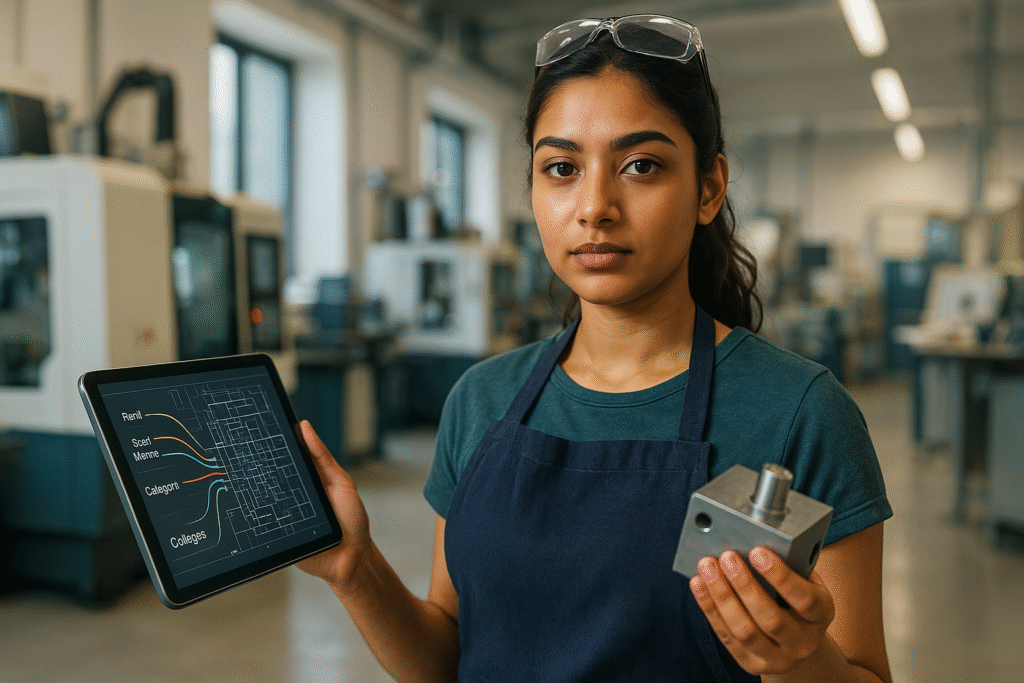
Traditional 11th–12th education is heavily theoretical — especially the Science stream. If your child’s strength is practical application rather than textbook memorization, polytechnic’s hands-on curriculum is a much better fit. A polytechnic diploma includes workshops, lab sessions, and industrial training from the very first year.
Situation 2: Family Finances Are Tight
This is the situation nobody talks about openly, but it is the reality for millions of Indian families.
If investing ₹5–15 lakh in a 6-year traditional B.Tech pathway is a financial burden — or if you need your child to become financially independent sooner — polytechnic offers a dramatically cheaper path with a much earlier payoff.
Government polytechnic fees are ₹10,000–₹35,000 per year. With SC/ST/OBC/EWS scholarships, the effective cost can drop to zero. (Read our complete Scholarship Guide for polytechnic students)
Your child can start earning at age 19 and then pursue B.Tech through lateral entry while working — or fund it themselves.
Situation 3: Your Child Is Not Interested in Medical or Law
This is a critical filter. Some careers have no polytechnic entry point:
- Doctor (MBBS): Requires 12th with Biology → NEET → Medical college. No diploma shortcut.
- Chartered Accountant (CA): Requires 12th pass → CA Foundation. No diploma route.
- Lawyer: Requires 12th → CLAT → Law college. No diploma route.
- Civil Services (IAS/IPS): Requires a graduation degree (though a diploma graduate CAN get a degree via lateral entry and then appear for UPSC).
If your child has no interest in these specific careers, then the 11th–12th route has no special advantage. Polytechnic covers every engineering and technology career just as effectively — often more so.
Situation 4: Your Child Wants a Government Job
This surprises many parents: a polytechnic diploma is sufficient for many government jobs.
- SSC JE (Junior Engineer): Open to diploma holders in Civil, Mechanical, Electrical
- RRB JE (Railway Junior Engineer): Diploma is the minimum qualification
- State PSC Technical Posts: Workshop Instructor, Surveyor, Electrical Supervisor
- DRDO, ISRO Technician Posts: Open to diploma holders
In fact, for SSC JE and Railway JE, many candidates with diplomas crack the exam faster than B.Tech holders because they started preparing earlier. (Read our guide on Government Jobs for Diploma Holders)
Situation 5: Your Child Struggled in 10th and You’re Worried About 11th–12th Pressure
This is sensitive, but important.
If your child scored between 40%–65% in 10th, the jump to 11th–12th Science (Physics, Chemistry, Math at a higher level) can be extremely stressful. The failure rate in 11th class is shockingly high, and many students who scraped through 10th find themselves failing or barely passing in 12th — which limits their options for competitive exams anyway.
Polytechnic, by contrast, starts from scratch. The first year covers foundational subjects at a gentler pace, with heavy practical components that build confidence. Your child gets a fresh start in an environment that rewards practical intelligence, not rote memorization.
This is NOT about your child being “weak.” It is about choosing the environment where they will thrive.
Part 5: The 3 Situations Where You Should Say “Wait”
Polytechnic is excellent — but it is not the right fit for everyone. Here is when you should encourage the 11th–12th route:
Wait If: Your Child Genuinely Wants to Be a Doctor
There is no alternative path. MBBS requires 12th with PCB (Physics, Chemistry, Biology) + NEET. No amount of polytechnic education will create a shortcut here. If your child is passionate about medicine, support them through the 11th–12th → NEET path.
Wait If: Your Child Is Academically Gifted and Enjoys Theory
If your child consistently scores 85%+ and genuinely enjoys studying Physics and Mathematics at a theoretical level, the 11th–12th → IIT/NIT path can lead to extraordinary career outcomes. The top B.Tech placements (₹15–50+ LPA at companies like Google, Microsoft, Amazon) are typically accessible only through the JEE → IIT/NIT route. Polytechnic graduates CAN reach these heights, but the path is longer and more difficult.
Wait If: Social Pressure Will Cause Lasting Damage
We wish we did not have to write this, but it is a real factor in many communities. In some families and social circles, choosing polytechnic over 11th–12th carries a stigma — despite being completely irrational. If this social pressure would seriously affect your child’s mental health or your family’s relationships, factor it into your decision. The best educational choice is useless if it comes at the cost of your child’s wellbeing.
The good news: this stigma is rapidly disappearing as the job market increasingly values skills over degrees.
Part 6: The Questions Every Parent Asks (Answered Honestly)
“Will society look down on my child?”
Less and less every year. India’s job market is shifting toward skills. The government’s Skill India and Make in India initiatives explicitly recognize diploma holders. Many recruiters now treat experienced diploma holders on par with B.Tech freshers. However, if your family is in a community where this matters deeply, be prepared to explain the lateral entry path — “My child will get a B.Tech too, just through a different, smarter route.”
“Can my child still get a B.Tech?”
Yes. Through lateral entry, diploma holders join B.Tech directly in the 2nd year (3rd semester). This is available in virtually every state through exams like ECET (AP/TS), DCET (Karnataka), or counseling processes. The B.Tech degree earned through lateral entry is identical to the one earned through the traditional route. No employer can tell the difference.
“What if my child changes their mind later?”
This is actually an advantage of polytechnic. After completing the diploma, your child has OPTIONS. They can work, study further, or both. In the 11th–12th route, if your child realizes they hate Science after spending a year on it, switching is painful and often involves losing a year.
“Is a private polytechnic okay?”
Government polytechnics are almost always the better choice — lower fees, better recognition, and stronger placement cells. Private polytechnics vary wildly in quality. If you must go private, check three things: (1) Is it AICTE-approved? (2) What is the placement record? (3) Are alumni getting jobs or further education? If the college cannot answer these questions with real data, walk away.
“What about the new AI and ML diploma courses?”
These are legitimate and growing. AICTE has approved AI & Machine Learning as a diploma branch, and several government polytechnics now offer it. If your child is interested in technology, this is an excellent choice. Starting salaries in AI/ML diploma roles are among the highest in the polytechnic world (₹2.5–₹5 LPA to start). (Read our detailed guide on Polytechnic AI Courses)
“My child scored very low in 10th. Can they still get into polytechnic?”
Yes. The minimum eligibility for most state POLYCET exams is simply passing 10th with 35–40% marks. Even if your child scored modestly, they can get admission — especially in government polytechnics during spot rounds and later counseling phases. (See our guide for Dropout Students)
“What documents do we need to start preparing?”
Start collecting these NOW — do not wait for the POLYCET notification:
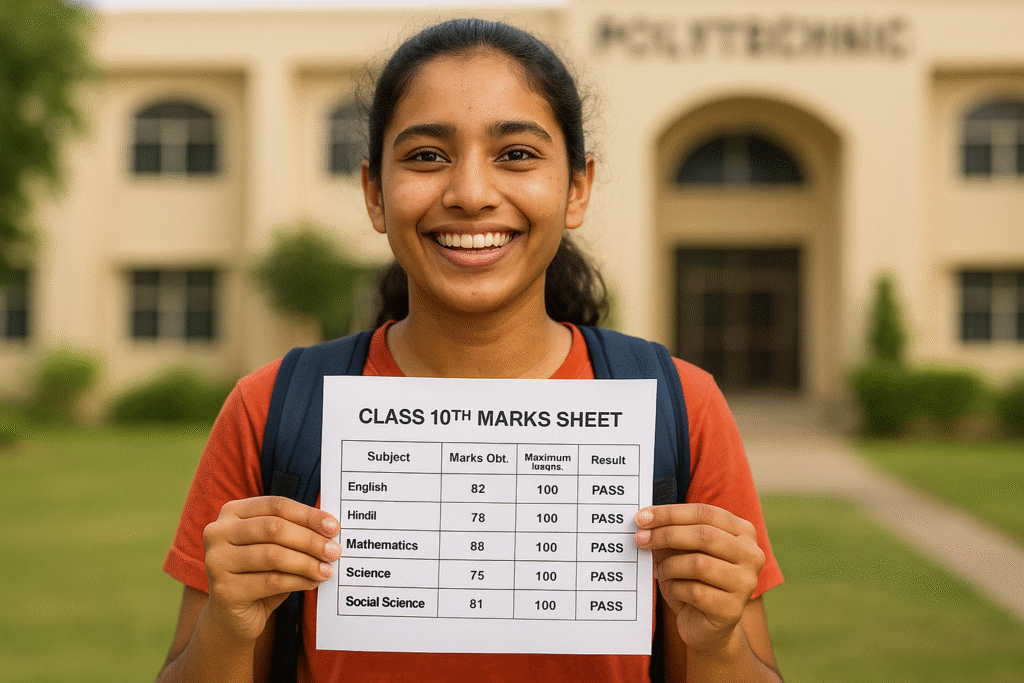
- 10th class marks memo
- Income certificate (issued after January 1, 2026 for AP; after April 1, 2026 for TS)
- Caste certificate (if applicable)
- Aadhaar card (name must match SSC certificate)
- Bank passbook (Aadhaar-linked, in student’s name)
- Recent passport photos
(Full document checklist with deadlines in our AP POLYCET 2026 Guide)
Part 7: A Decision Framework for Your Family
Answer these 5 questions with your child. Be honest.
Question 1: Does your child enjoy working with their hands more than reading textbooks? → If YES, polytechnic is a strong fit.
Question 2: Can your family comfortably afford 6 years of continuous full-time education (11th–12th + 4 years B.Tech)? → If NO, polytechnic’s lower cost and earlier earning potential is the safer choice.
Question 3: Does your child want to be a doctor, lawyer, or CA? → If YES, those paths require 12th class. Polytechnic is not the route.
Question 4: Is your child interested in engineering, technology, or technical work? → If YES, polytechnic is designed exactly for this.
Question 5: Would your child benefit from a “fresh start” in a new environment after 10th? → If YES, polytechnic offers exactly that — a new campus, new subjects, and a curriculum that starts from basics.
If you answered YES to Questions 1, 4, or 5, and NO to Question 3 — polytechnic is likely the right choice.
Part 8: What to Do Right Now (March 2026 Action Plan)
If you have decided to explore polytechnic for your child, here is your step-by-step plan for the next few months:
This Week (March 2026):
- Get your child’s income certificate issued (MeeSeva / CSC center)
- Verify Aadhaar card details match the SSC certificate
- Open a bank account in your child’s name (if not already done)
When POLYCET Notification Comes (Expected March–April 2026):
- Register immediately for AP POLYCET or TS POLYCET (Guide here)
- Upload photo in correct dimensions
- Pay the application fee (₹400 for OC/BC; ₹100 for SC/ST)
April–May 2026: Exam Preparation
- Focus on 10th class Science and Math — POLYCET questions come directly from the SSC syllabus
- Practice previous years’ papers (See our Top 5 Scoring Chapters strategy)
- No negative marking in POLYCET — your child should attempt all 120 questions
June–July 2026: Counseling & Admission
- Research branches and colleges before counseling begins
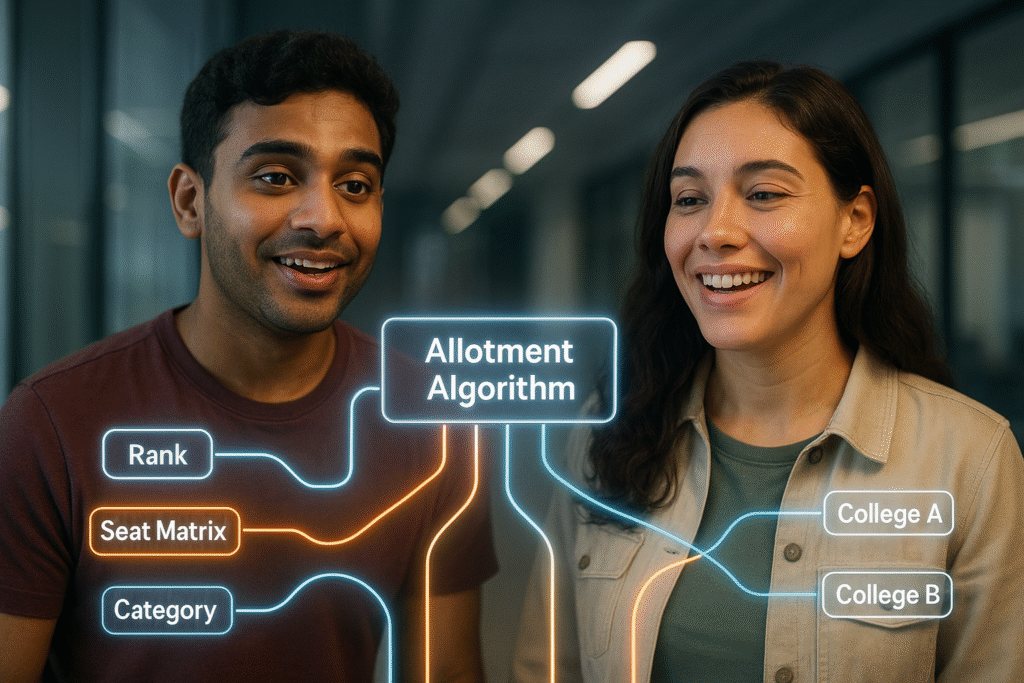
- Enter 30–40 college choices minimum during web options — never just 5 (Read the Rank Paradox)
- Check TFW (Tuition Fee Waiver) option during counseling
- Apply for scholarships on JnanaBhumi/ePASS immediately after admission
Final Words: To the Parent Who Is Still Unsure
We understand the weight of this decision. You are not just choosing a course — you are shaping the next decade of your child’s life.
Here is what we can tell you after years of working with polytechnic students and their families:
The children who succeed are not necessarily the ones with the highest marks. They are the ones whose parents believed in them, supported their choice, and helped them navigate the system — the scholarships, the documents, the counseling process.
Polytechnic is not a shortcut. It is not a compromise. It is a different strategy — one that has produced lakhs of successful engineers, government officers, entrepreneurs, and skilled professionals across India.
Your child’s future is not determined by which path they take. It is determined by how well they walk it.
And if they stumble? The system has safety nets — lateral entry, higher studies, certifications, government exams. There are always second chances. What matters is the first step.
Help them take it.
Disclaimer: This article is for informational purposes only. Career decisions should be made based on individual circumstances, interests, and aptitude. Diviseema Polytechnic Hub is an independent educational publisher and is NOT affiliated with any polytechnic college, government department, or admission authority. Always verify current admission criteria and deadlines on official portals.
Related Articles on Diviseema Polytechnic Hub:
- Every Scholarship a Polytechnic Student Can Get in 2026 — SC/ST/OBC/EWS Master List
- The “Income Certificate” Trap: Don’t Let a Date Error Cost You ₹25,000
- AP POLYCET 2026 Notification: Expected Date & 5 Critical Documents
- TS POLYCET 2026: Application Guide & Photo Size Requirements
- Polytechnic Admission for Dropout Students (2026 Guide)
- Top 5 Scoring Chapters for POLYCET 2026
- The Rank Paradox: Why 15K Rank Beats 5K Rank in Web Options
- Polytechnic AI Courses — Eligibility, Syllabus, Career Scope
- High-Salary Government Technician Jobs After 10th & 12th
- Civil vs Mechanical — Which Branch for Government Jobs?
Author: Chinnagounder Thiruvenkatam, Founder & Chief Editor — Diviseema Polytechnic Hub
Last Updated: March 2026